Forward note –
In this writing I am thinking of somatic, embodiment, mindful, movement and dance spaces I have been in – of colleagues I have met there, of teachers I encountered. Primarily, this writing is by me, a White person, wanting to have dialogue with other White people in these fields. That said, there are some questions in here which I ask everyone working in these fields. Hopefully this info adds a bit of helpful context, to decide if reading this is up your alley or not.
Too, if you’d like to get a better sense of what I’m about before or after reading this, you can do some of that here.
–
–
Beyond somatics and affiliated healing modalities, mindful practices, meditation, dance and movement spaces, I’ve noticed the term somatics has been trending, for some time now – popping up more and more into popular magazine articles and so forth.
Frontiers in Neuroscience tells me, “There is an emergent movement of scientists and scholars working on somatic awareness and embodiment.”
In broader public spheres, the work of many, many people involved in movements for Black Lives have heaved global consciousness forward. From that on-going work, there have been some calls to do somatic work as part of healing and anti-racism practice.
Those are just a couple of examples. Here and there I notice the term somatics gain that much more traction in popular knowing.
–
One little factoid that matters to me in this story is that the term somatics was coined in 1979 by a white person in the US. For this story, I am not focused on who coined this word, because for me these questions are not about one person. Rather, this story is more about wide systems, somatics culture, appropriation, racial justice, respectful relating, euro colonization, and white cultures. My point is, it is significant that somatics was coined by a White person.
–
In terms of neologisms, people are always making up new words, as well as continually changing the meaning of words. Personally, I love some new made up words.
As far as I use this term, the word somatics is a sort of an umbrella word, referring to a wide variety of practices. Most of the wide variety of practices that it refers to are age-old, or inspired from age-old practices. That is, people have been doing noticing how they feel in formal and informal ways, all over the world, for time immemorial. With that in mind, the smelly-thing-of-it-is, calling all of these somewhat related practices somatics seems a bit like Columbus calling new-to-him-but-already-named lands – the Americas.
But is that the case here? Were these lands already named? While these ways of being-and-doing are not new, was there already an umbrella word that this word somatics is replacing? Do you know, was there an umbrella word?
In English I know of terms like embodiment, awareness, sensing, feeling, mindful, body-mind… Anywho, whether it’s this word somatic or somatics, or any other word for that matter – is it even appropriate to name this stuff with one word, be it in English or from any other language?
No! Says my heart-insides. Language can work magic, bursting open souls and noses into seeing new imaginations and conceptions, sensory organs into FEELing new tastes! There is no need for one word. Having many names is wonderful – just like plants that people really like tend to have a myriad of names. May all the words for this stuff be forever plentiful, and may their definitions be ever-slippery!
Pragmatically speaking, having a commonly known term or two to describe this sort of work helps me with basic verbal communication. Like, if I want to tell my childhood friend what it is I do. Or, for those of us who desire to earn basic income in exchange for our labor as teachers, practitioners, and/or healers – it certainly helps if we can tell people what the f- we do, with nouns and verbs they are remotely familiar with. Thus, as more people become familiar with the term somatics, explaining what I spend a lot of time doing becomes a lot easier.
Meanwhile, lurking around me, I feel the question,
but is this just another case of Columbusing, to use this term somatics?
–
Maybe you use embodiment to describe your work? Perhaps mindful? Maybe you teach about movement? Maybe you teach dance or other artistic practices, maybe you call your work energy work, maybe you do ceremony work?
Whichever words you use to describe your work – who do those words refer back to, who do they come from? What’s the word and knowledge lineage of what you do?
–
In my experience, when I have gone to a kung fu class, an authentic movement session, a capoeria class, a zen sit, a yoga class, a holiotropic or rebirth breathing group, a religious service or a ceremony, done artistic creating, sang in groups, sat by a tree, been in a focusing group, and more – I find a lot of similar terrain in terms of being of, working with, fostering similar ways of being. That is, while there is a great deal of variation, generally speaking I usually feel more calm-vitality, more centered, more stable, more gently energized.
When I go to a gathering spot where people use the word somatics, I have felt a lot of shared terrain and/or overlap with these activities and places noted above. I usually arrive to a similar calm-vital state. Again, while there is variation, all these spaces seem to be generally oriented towards similar ways of being-doing.
–
Even with all that similarity, when I see the word somatics on a brochure, or to a lesser degree embodiment – there is some amount of feeling, ‘Ah, yes. THAT is a SOMATICS class‘. I have felt this in so called South America, USA, and in many European countries.
What I am saying is, there is something of a somatics culture, from my perspective.
In most spaces I have been in which use the word somatics, I have repeatedly been informed that a relatively small group of people are the somatic founders. All of those people are white skinned-Euro/decent people.
When I arrive at gathering spots which wave the word somatics, the crowd is most often white-light skinned, cis, straight, non-disabled-bodied, mostly women, mostly middle-class to a-lot-of-money-havers people.
Specifically, what I aim to highlight is that I think the word somatics is made by, refers back to, and has been largely used by White and European cultures.
Somatics culture centers these cultures.
–
Wonderfully and sometimes terribly so, words and cultures are slippery.
Embodiment empires, consciousness studies programs, many spiritual and/or new age gatherings, somatic or ecstatic dance, movement culture, phenomenologists and more – in my experience, all these examples are cultural hubs that are dominated by White people and/or White culture. They are populated by and centered around White and/or Euro experience.
Call it somatics, or embodiment, or by any other name – a rose is still a rose. If whatever is happening centers light skinned people, it centers light skinned people.
I don’t think that is necessarily a bad thing. For example, I think this is super when people with white-or-light skinned experience gather to do anti-racism-undoing together, and/or to learn about their ancestral cultures.
In regards to somatics-and-related spaces, I think one place where bad things creep in is when the people involved claim that space as universal. I’ve heard many comments from my White collegues that people are people, healing is healing, love is love, and that they do not see color.
If you would like to read more about why many people find this a damaging mindset, there are many writings explaining this in detail. Just a few examples include Mridula Amin, Micha Frazier-Carroll, Larry Feralzzo, Heather McGhee, or this study put out by the American Psychological Association.
–
I am not trying to pin down, tightly squeeze or corral the word somatics, nor any other word or culture mentioned here.
I am trying to consider them.
I am trying to find respectful relating and explore in order to better understand:
how I do, where I go, what I say, who I am hanging out with, who I chose to learn from –
if, what, and how that is or is not contributing to racial and/or other forms of oppression.
–
Some good news in my perception is that the term somatics seems to be slowly changing. This shift, as I understand it, seems to be because of the work that many, many people are – and have been – doing in relation to racial justice. As just one of many examples you could look into the work emerging over at A Lifetime in Quarantine.
The word queer was re-appropriated from straight people. Perhaps Black, Brown, global majority or BIPOC people can or have already re-appropriated the word somatics?
I don’t know what any of this means for the future of somatics culture broadly, nor any other name-it-what-you-will related culture. I do know I feel some excitement about it.
–
Moving from questions of re-appropriation to questions of appropriation,
at times there are real clear examples of all-lives-matter somatics people engaged in all manner of appropriation. Other times, discerning what is cultural appropriation and what is not in relation to somatics feels tremendously complex to me.
People have lots of ways to define appropriation. For me, one important aspect in discerning appropriation seems to be about relationships of power. Are the people involved in lateral-relating power dynamics or hierarchical ones?
For example, take person G. G is from a dominant/colonizing culture and they are using a practice from culture Z. Culture Z has been systemically oppressed/colonized by G’s culture. Is G being appropriative?
Is G earning money, social clout-likes, or practicing rather privately?
Has G been invited to teach/heal using this practice by many, many people from culture Z?
Is G also, actively following the lead of Z cultural leaders and doing work to unravel the system of oppression that impacts culture Z?
Importantly, as Kim Tran writes, ‘If there’s one thing I’ve learned after almost 10 years of research, it’s that knowing what is or isn’t racist is not a hard science.‘
To be clear, the appropriation I am talking about is not borrowing or cultural fusion. If you feel like those are synonymous terms with appropriation Rina Deshpande, and AORTA collective explain it further. A short way to say what I mean is – vampiring-stealing-using from someone(s) who has less material resources or systemic voice-power than you – and then not pitching in with their struggle to change that systemic power imbalance.
If the word appropriation feels radioactive in you – is there a way that you can you think about this topic through different words or questions – such that you don’t shut down or run away from investigating lateral-and-horizontal dynamics related to your life? If so, please, replace my use of this word with words that work for you.
Those white somatic founders I mentioned earlier, many of them are G.
Consider Bainbridge-Cohen, Rolf, or Feldenkrais. Is their work [fill in your words that roughly equate to my use of appropriative]?
If you notice a big ol’ auto-clenching response happening in you, please take a break from this article and do some practice that supports you.
If you return, if you keep reading – I am not accusing any particular person of appropriation here.
What I am explicitly doing is calling in continued awareness and conversation.
For, that which has been normalized for white-light skinned people – aka what ‘everybody’ does – has historically been an inaccurate indicator of respectful relationship.
I really like so much of the work of all the people mentioned here.
Alas, when I have written or spoken about appropriation in white somatics spaces I almost always hear a flurry of upset flying outwards in response to such questions.
In a field which promotes flexible, responsive nervous systems and regularly leaning-in to edgy, difficult topics, and respectful relating – these questions ought not be sacrilegious to ask. No?
–
A few of the aforementioned ‘somatic founders‘ I was taught about – such as Mabel Todd, Elsa Gindler, or FM Alexander, for example – all seemed to develop their practices while in relative isolation. They drew on their personal experiences and basic knowledge from their cultures of origin. If you are into cognitive science or European philosophy you might cite Merleau-Ponty or Husserl as a similar sort of ‘somatic founder’. Like people have been doing since time immemorial, they noticed stuff. Profound stuff.
The part of their stories that make me so happy is that they help me remember:
simply by exploring one’s felt experience in a nuanced way, one can find incredible things.
It’s empowering. I’m reminded that I don’t necessarily need to pay a lot of money nor learn from a god-like, charismatic, or famous teacher in order to find incredibly healing tools, profound moments of being, and deep intimacy with the world I am a part of.
I can simply explore, play, pay attention.
The issue is – the list of somatic founders that I see again and again are all white-light skinned people.
I have also heard people speak about somatic work all deriving from various Asian traditions. Looking into the aforementioned light-skinned founders, many of them did weave their praxis atop a backbone of Judo, Aikido, Yoga, various forms of Buddhist meditation, or many other practices from Asian cultures. I suspect that it is in direct relation to this reality that in many of the White dominated somatic contexts I have been in, romanticizing various Asian cultures has been a common phenomenon, akin to or a part of New Age Orientalism.
I feel a breath and a moment of clarification is wanting.
I am not saying that White people should not study traditions rooted in any Asian cultures, nor any other tradition.
At this moment, my aim continues towards inquiry – about who are called somatic founders, where they learned from, and in-taking broadly and continuing to ask myself:
how does what I do in my praxis, where I learned, and/or who I learned from relate with various forms of social oppression?
I feel it is important to re-stress that ancestral people from all over the world have been doing related practices since time immemorial. Some cultures have kept these practices alive through the centuries. Some practices have been lost. Some violently prohibited. Some practices have been re-found or revitalized.
Some practices maybe emerged and remained a sort of personal thing, the way a child might learn to use their limbs, explore a meadow, or discovery their arousal. Through rather solo sensing and noticing, exploring, being curious, paying attention – likely, some practices have remained small. Likely, some practices never needed to become a social ceremony, a branded system, nor a certificate program.
I am not saying all this stuff has been around forever and so that means that we can all use whatever practices, however we want. I am saying, it is possible to find profound stuff without a human teacher or well known lineage.
Simultaneously, most of us in this field have learned some or most of what we do via some human lineage(s); when that is the case, I feel it is important to understand the context of this lineage, in all its social complexity.
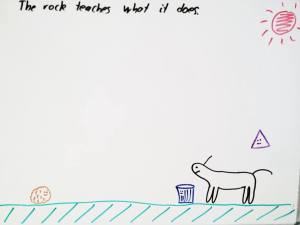
Or, maybe just name nature (of which humans are a part of) as somatic founders?
IF we are to name somatic founders whom are people – having an entirely light-skinned list of people seems quite clearly wrong, untrue. As well, I feel it contributes to a white-washing narrative, that it’s another form of Columbusing.
–
As somatic culture changes, as there are more Black, Brown, BIPOC, global majority teachers and healers, some of these topics with vastly different dyanmic-shapes rise up. For example, when person B and person Z are from roughly lateral positions in terms of social, systemic power and oppression within a wider culture – when and what is appropriate or appropriation?
In relation to lateral cultural appropriation I am moved by conversations happening such as with All My Relations and Nadra Nittle. Their way of talking about this stuff expands my understanding of relating in vital ways.
–
Of course, there are many other-than-racial systemic power imbalances which effect lives in roughly lateral, or complexly situated ways. I find them to be so friggin tricky.
For example, once I had a rich, White, cisman boss who was also a dancer and living with quadriplegia. I found him to be unbearably classist, sexist, and racist. He found me, a non-disabled ciswoman with very few dollars to my name, to be unbearably ableist – and probably, other not-so-great things. We never found mutual, respectful relating.
As we lived together I felt our various and respective aspects of oppression and privilege roll along, lumpy, and often ramming into one another. I am naming a few aspects of our identities but I am trying not to compare us; I find it damaging to engage in “oppression olympics”. Nor am I a fan of making tidy lanes that each of us needs to be contained in. I am trying to emphasize:
We are nature, we are complex, we are messy, we are many things at once.
And – at the same time, my body bursts with a yes! to the words of Barbara Smith, “we acknowledge that people have different relations to systemic oppression, based upon who they are, and that we have to take that into account when we are trying to figure out ‘which way forward?’ and ‘what are we going to do to eradicate and to challenge that oppression?“. Exploring ways in which we each experience privilege and oppression within our various, or perhaps ever-changing social contexts, this feels imperative to an overall aim of vital-relating with one another.
Somatics work involves deep healing and learning. We have tools, practices to tend-to and explore all our relationships, with humans and other-nature, in amazing ways.
If we don’t investigate how the power dynamics of our life feel, in both personal and broad, systemic ways – if we don’t use our tools to sense beyond our own skin, to listen in-to the experience of others – then, well,
what the heck are we doing?
–
In the US, the situation is such that we are all currently, still, grappling with the land theft, genocide, slavery and other atrocities done by generations of Euro-decent/White colonizing-settlers. While we cannot undo what has been done, we can do something.
We can learn about how other nation states and peoples have navigated similar conversations. We can be in conversation about what sorts of words and actions we might consider, towards national healing and new ways of relating. Many, many people, like Sheila Jackson Lee and the NDN collective for example, have been contributing to moves in this direction.
Can doing reparations work in somatics, embodiment and related cultures become a norm? Investigating power and other dynamics involved in your own line(s) of practice and life seems a piece of that.
For those of ya’ll in this field interested in reparations, deconstructing colonialism and investigating our sort-of-lateral relationships and other more-complex dynamics – all that also feels like a part of our work. To you all – no matter what words you use to describe your work – thank you. I hope we continue to help each other move with and through it all.
–
As of this crisp October day of the year of the dumpster fire, 2020, I do not know what language to use when I am talking about a wide variety of practices which share a lot in common. May the words be forever slippery! And may you turn into a pumpkin if you are not being relationally considerate.
—
POSTSCRIPT:
Today I was listening to one of Prentis and Eddy Hemphill’s podcasts, S2E10. I feel that what Prentis is saying about their lineage in somatics is really important (about min 1:45). Please do give a listen.
(A version of this article was written more sloppily back in some early month of 2020. This molted version happened 22 oct 2020 – erinbell. Further updates on 27 july 2021).
 Relational Awareness